

Contents

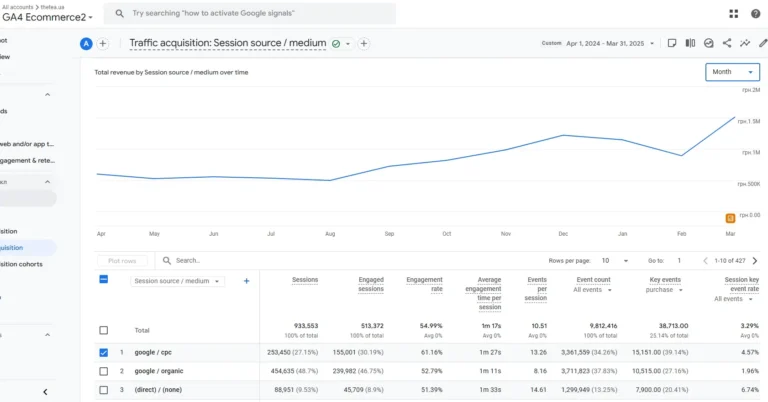
- traffic has doubled in 2 years
- 2.4x increase in conversions from Google organic traffic

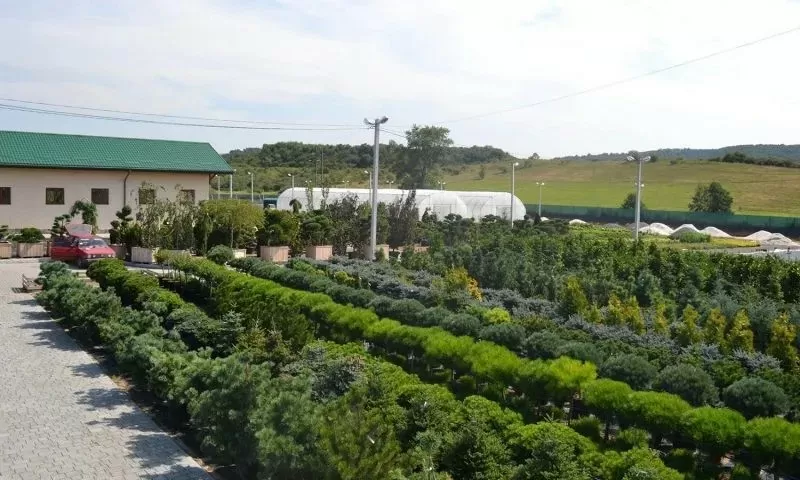
The Plants Club group of companies offers complex solutions for home gardeners, landscape groups, and garden centers. The company has been on the market for 11 years. They work with 33 hectares of coniferous and deciduous trees and shrubs; there are more than 1000 plant varieties in their collection, along with a large assortment of garden tools. They are the official representatives of more than 20 global brands.
This niche has a great seasonality, which must be taken into account in its promotion strategies.
The client contacted us in the summer of 2017. Their search traffic and sales had dropped significantly over the past six months. One of the main reasons was their unsuccessful move to another CMS at the same time as their move to HTTPS.
We were tasked to return traffic, find points for further traffic growth, and develop a long-term SEO strategy.
Due to their previous negative experiences in site promotion, the client distrusted SEO specialists at the start. So we decided to divide the work into 3 stages:
After receiving positive dynamics for each stage, we were able to proceed to the next one.
Start of work: 09.2017

1. After changing the CMS, the URLs were changed too, but the 301 page redirects were not configured. As a result, many texts lost their uniqueness, since when the search bot crawled the pages, they gave a 404 response from the server, and only after some time did they index new pages. The bots considered the new pages duplicates of the old ones, which led to the pessimization of the site.
What we did: Since quite a long time had passed, there was no reason to make a redirect map. So we set up a page-by-page 301 redirect only from the pages that had external links.
2. The search engine index contained a copy of the site on the developers’ subdomain, which was not closed from indexing.
What we did: We removed the duplicate of the site from the index via the webmaster. Also, we closed general access to the subdomain.
3. We found that every site page (product / category) had a copy for a specific city (in the header of the site there was a switch for cities).
Example: https://plants-club.ua/ru//region/kharkov
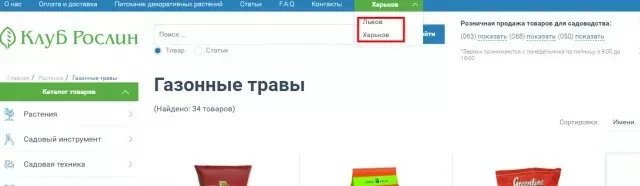
Even though the meta tags were regionally unique, the content was the same everywhere. It was difficult for Google to determine the relevance of each group of keywords inside the site because relevance was blurred. Such pages did not generate traffic and, in general, pessimized the site for Google.
What we did: We configured 301 redirects from all cities to 1 canonical page without a city.
4. We found template problems with 301 redirects: they worked through 2-3 intermediate redirects, and as a result, the site lost part of the link weight.
What we did: We set up correct redirects.
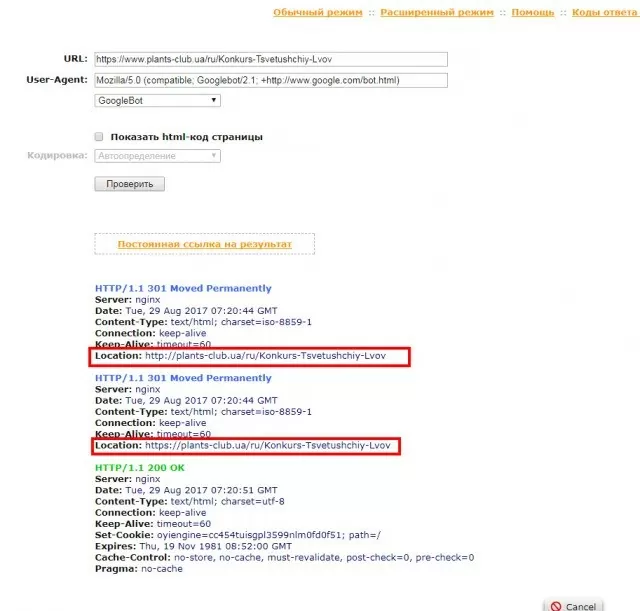
5. The 301 redirect from HTTP to HTTPS – had only worked for the main page. For this reason, there were 2 partial versions in the Google index.
6. The site had about 2000 broken internal links to old products; we made a map to fix it.

7. We closed pages with GET parameters that were useless for Google (sorting, search, service pages, etc.) from indexing.
8. We implemented the markup of language versions via the rel=”alternate” tag.
9. We found many pages either without meta tags, or with duplicated or irrelevant meta tags and titles. We wrote template meta tags for different types of pages.
10. The Sitemap file contained pages that were giving 404 errors. We removed such pages from the sitemap.
11. We wrote a technical task to improve the speed of the site.
12. We conducted an SEO tech audit with a huge checklist. As a result, we wrote a technical task for a programmer with a list of the problems, examples, and specific solutions.
13We found that earlier there was another domain for budyak.net. All its pages were redirected to the main plants-club.ua page, and link weight was not transferred to specific categories.
What we did: We analyzed the best links and compiled a page-by-page redirect file for the budyak.net site.
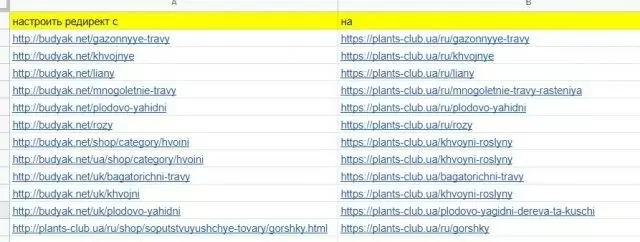
14. When analyzing backlinks, we found a lot of low-quality links. This list was rejected via the search console and sent to disavow links.
Duration of the first stage: 1 month
Results of the 1st stage: Written specifications for technical optimization and optimization of the link profile set the foundation for further growth
Previously, the client’s copywriters wrote content quite actively. Texts were already written on many categories and products. Due to this, the client already received good traffic before the decrease.
When searching Google for pieces of text in broad match, the client’s texts were often not in 1st place in the search results, which indicated the pessimization of the site (we wrote the reasons at the beginning of the case in detail).
What we did: We have compiled a register of all categories and subcategories of the site and divided the semantics into 3 months of work, taking priorities into account.
For each page, the following task list was made:
Unfortunately, we were unable to expand the structure, since the site was working with 1C, and this required large additional resources.
The client’s copywriters, with our support, wrote or finalized all the basic texts for the site in 4 months.
Duration of the second stage: 3 months
Results of the 2nd stage: Copywriters compiled all new texts according to the formed semantic core, meta tags, and technical tasks for texts across the entire site.
1. The client was constantly working on site improvement, and as a result, SEO errors appeared constantly. So every month we did a technical SEO audit, compiling mistakes from the Screaming Frog SEO Spider and Search console and preparing technical specifications for the programmers.
The structure was partially changed, and new pages were added for individual keywords clusters. The client’s copywriters wrote texts for all product categories.
2. At the first stage of link building, we placed mostly non-anchor links on thematic and trusted news resources, focusing on the quality of inbound links. Links were received through link services and outreach.
Also, every month, they posted links on forums and in comments under articles, where it was possible.
The site has product groups with different seasonal demands. The task was to get to Google’s top by the beginning of the season for the main groups. So pages for link building were selected 4 months before a particular season. Priority categories were optimized carefully by on-page parameters, and the linkbuilding to these pages was included too.
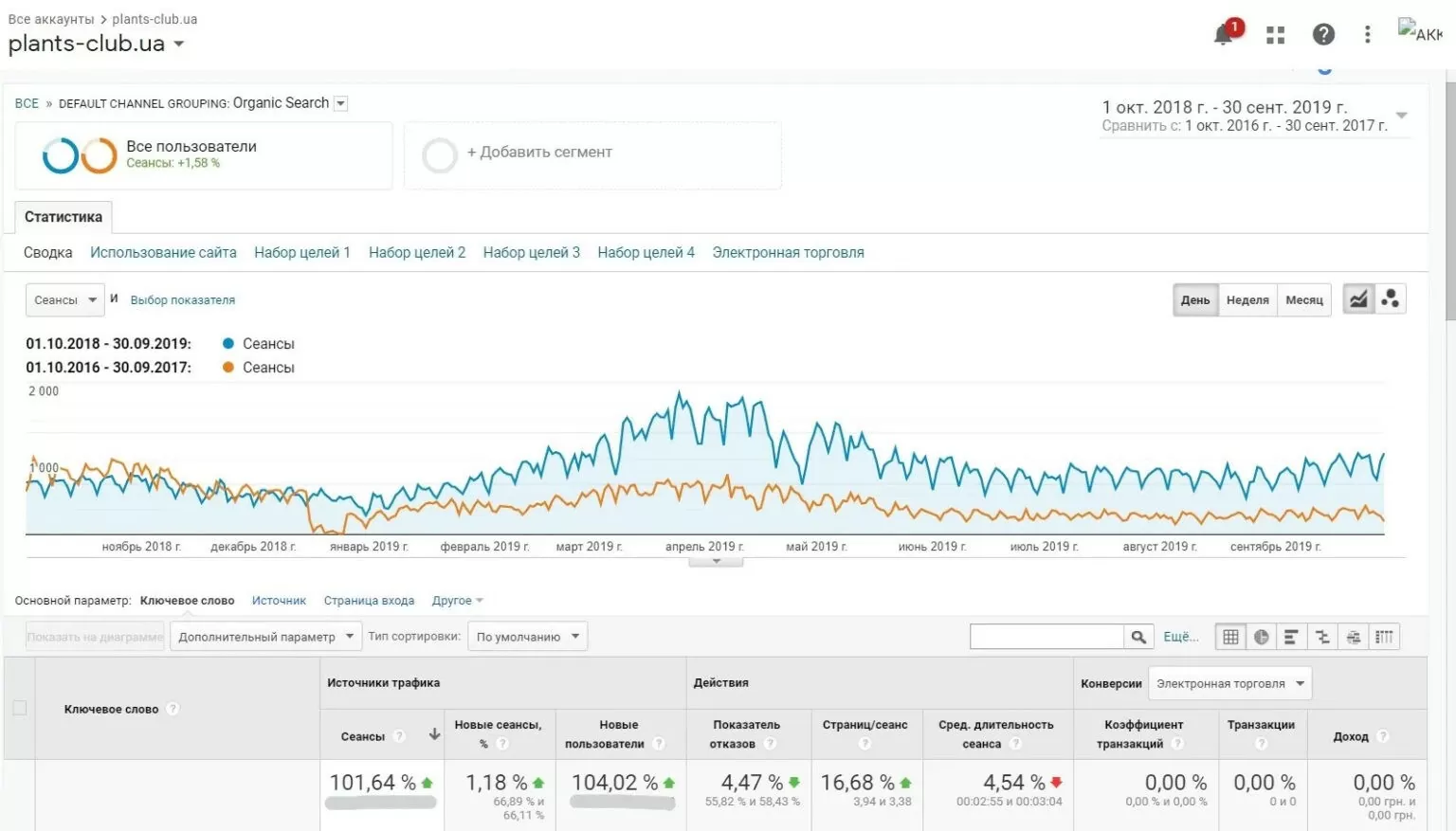
1. The main reason for the traffic drop was the uncoordinated work of the programmer and previous SEO specialist. After changing the structure of the site and moving to HTTPS, the work on “gluing” the pages was not done in a satisfactory amount of time. The old methods of getting traffic were also applied (different pages for every category and city).
As a result:
It is critically important to make redirects when moving to other CMS and changing URLs.
2. Thanks to the well-coordinated work of the client and the agency, good results were achieved