Links, and promoting a website with them, are one of the key components of SEO and an important factor in growing a site’s online visibility. Link-based promotion is often called off-page SEO or off-site optimization. It is a large set of tasks aimed at getting other websites to link to the project you are promoting.
In this article, we will cover:
- Why are links needed for SEO?
- How do SEO specialists get links to the sites they promote?
- What types of links are there?
- Should you buy links, and how do you buy them correctly so you get results rather than Google penalties?
- How do you build a link profile the right way?
- How do you measure the effectiveness of backlink promotion?
Google doesn’t always say so directly, but links are among the top 3 factors that affect a site’s rankings in search results. One of the SEO gurus, Brian Dean, confirms this in an article on the Backlinko blog.
Why will links always matter for rankings and high positions in Google? There are several reasons:
- Backlinks from authoritative, high-quality websites tell Google that a resource is informative and useful and should be shown as high as possible in search results.
- Backlinks pointing to a site speed up its indexing. Thanks to links, search bots reach and crawl your site faster, which means Google adds your pages to search results sooner.
- Links from relevant, topic-related websites are an additional signal of which queries the site should rank for.
- Links can bring your site additional visits. There won’t be many of them, but each such visitor is usually highly interested: they will spend some time on the site and may even become a customer.
But there is another side to it. The days when you could simply buy as many links as possible, without choosing the websites or placement method, are long gone. Google has become more complex and smarter.
Below, we explain how to get links and where to buy them so that your link building actually delivers results.
An SEO specialist’s work with links is not limited to deciding how and where to buy them. It also includes:
- developing a link building strategy that defines the pace of work, the types of links, and the site pages that are a priority for link building;
- building links directly, by buying them or by other methods;
- analyzing link building results (growth or drops in Google rankings, traffic changes);
- adjusting the link building strategy.
Let’s go through all of this in more detail, starting with the types of links, how they differ, and how you can get them.
There are several different types of links you can use to promote a website. We will look at the main categories and the ways to get each type.
These are links placed in articles published by online media, blogs, and in some cases other companies’ websites. Article links can point to your homepage, service pages, product categories, or other articles on your blog.
The choice depends on the specifics of your business and your strategy.
There are several ways to get article links to the site you are promoting.
Link marketplaces are online services that act as intermediaries between websites that sell article placements with links and those who buy such links.
These services are in demand for several reasons:
- they let you choose from a huge number of websites on different topics — the catalogs of the most popular marketplaces contain thousands or even tens of thousands of sites;
- all sites can be filtered by several criteria, including placement cost, region, topic, language, and SEO metrics;
- marketplaces make it easier to manage your link budget;
- the marketplace often acts as an arbiter in disputes, guarantees placement quality, and so on.
There are several popular marketplaces for buying links.
This marketplace lets you place links on thousands of websites from dozens of countries. It suits projects in many different niches. For each site, you can view its SEO metrics from services such as Ahrefs and Serpstat.
You can also order ads in Telegram channels and chats through the service. This goes beyond SEO but can be an extra tool for promoting your website.
A marketplace with similar capabilities. It also offers a large selection of websites and lets you filter them by topic, region, language, SEO metrics, and more.
A service for article link building and PR publications. Its capabilities are similar to the two platforms above.
Now you know where to buy article links for website promotion. But how do you do it correctly? Here are some basic recommendations:
- Build links gradually and regularly. Don’t expect one or two expensive article links to keep your site at the top of search results once and for all.
- Define priority pages for promotion. You can’t build links to all pages equally actively, so it’s important to identify the pages that will bring the most profit in the long run — and promote them with links first.
- Fix technical errors. No ranking factor works 100% on its own. If you want to get the most out of link building, audit your site and fix every issue that prevents pages from being indexed or lowers their click-through rate in search results.
- Analyze your competitors. Find out which websites link to them, how actively they grow their link profile, and so on. This information will help you build the right link building strategy and estimate the budget you need to get results.
- Combine article links with other types of backlinks.
This is another type of link you should definitely use to promote your website. Catalogs are resources that list websites by topic and region. As a rule, a link is accompanied by a short description of the resource and sometimes contact details.
Directories can be general or niche-specific. They are used less and less in the Ukrainian segment of the internet, but they are still useful for promoting English-language websites. Although links from them play a supporting role, we recommend using directory links to “dilute” your link profile and improve your site’s SEO metrics.
There are many websites where users can register, create a profile, and add an active link to their own site. Such links are also widely used in link building. They complement your link profile and make it look more natural.
This is another important category of links. It includes links placed in comments on blog articles, news, and forums.
Choose crowd marketing platforms carefully. Ideally, they should meet several criteria:
- Minimal spam. The fewer outbound links a forum has, the better. Otherwise, the effect of such links is simply spread thin across thousands of other websites.
- Maximum topical relevance. For example, to promote a construction services website, the most effective options are forums or forum threads dedicated specifically to construction. Aggressive link spam in comments will only harm the promoted site and the business’s reputation.
- Maximum value. Meaningful, genuinely useful content always earns more links, is approved by forum moderators more often, and so on.
Besides forums, in the English-speaking segment people use platforms such as quora.com, reddit.com, and similar ones to get links. On these platforms, users can publish their own content, post links, and join discussions.
For a long time, promoting websites with rented links was popular. As a rule, such links were placed chaotically in sidebars or footers, with no topical connection to the content on the pages.
In addition, rented links stayed in place only as long as you paid a monthly fee. When the links disappeared, so did their effect, and everything had to start from scratch.
In 2024 and beyond, we don’t recommend using rented links for three reasons:
- they are placed on very low-quality websites;
- they can disappear;
- their effect is minimal, because a single site usually hosts a great many of them.
Google doesn’t recommend buying links and emphasizes that they should be earned naturally by creating high-quality content. This really matters. But there is a flip side: even very good content generates few links on its own, so the process has to be accelerated.
Any work an SEO specialist does to build a link profile has a cost. So, in a sense, all links are bought. How do you buy links for website promotion the right way? We have already covered how to build article links. Now let’s talk about how to choose the donor sites you’ll get links from.
You can tell whether a donor site is suitable for a link by several criteria:
- Topic. The donor site should be as close as possible in topic to the site being promoted.
- Traffic. The more visitors the linking sites have, the better. It’s not only that users can follow the links straight to your site. High traffic on a donor site tells us that Google considers it high-quality, and a link from such a site will give us the greatest possible growth in rankings and traffic.
- Geography. Another important factor is the region the site is associated with. It can be indicated by the domain name (for example, com.ua for Ukraine) and the main language of the content. To get organic traffic and rankings in the region you need, choose donor sites associated with the same country first.
- Domain Rating (DR) is a metric that shows the relative strength of a site’s link profile and its authority in its niche from the search engines’ point of view. Popular SEO services such as Serpstat offer their own alternative metrics for the same purpose. The logic behind these metrics is similar, but the values may differ. Either way, the higher a site’s DR, the more effect a link from it will have.
You already know that the effectiveness of link building depends on the characteristics of the sites you get links from and on the type of content (articles, forum threads, profile descriptions, comments). But that’s not all — the links themselves differ too. Let’s take a closer look.
Links often have additional attributes in the code. They tell search bots how to behave when following the link. If there are no attributes, Google’s bots will follow the link and crawl the page on your site. A nofollow attribute added to a link instructs bots not to pass link equity and other site metrics.
Does this mean nofollow links are useless? No. Google sees them, and our SEO experience shows that such links also affect rankings and can bring you traffic too. Nofollow links also make your link profile look natural and reduce the risk of Google penalties.
This raises a logical question: what is the optimal ratio of nofollow to dofollow links? Opinions in the industry vary. Some simply say there should be more nofollow links; others name specific percentages. We are convinced that only competitor analysis gives an accurate answer. You can often find top-ranking sites whose nofollow links make up just a few percent of their total link profile. The best approach is to be cautious: start by getting mostly nofollow links, and later follow the benchmarks of the competitors at the top.
An anchor is the text a link is attached to in the page code. It can tell Google which query the linked page should rank for.
There are several types of anchors:
- Commercial. Words and phrases that indicate buying something.
- Branded. Anchors that mention a specific company.
- Generic (non-anchor). Phrases such as “read here”, “here”, and others with a similar meaning.
Working with anchors incorrectly can cause serious problems for website promotion. Back in 2012, Google introduced the Penguin algorithm, aimed at fighting spam and manipulation of search results. A violation can cause a site to disappear from search results completely or partially.
To avoid this, we recommend:
- not using commercial anchors with exact-match keywords;
- making your list of anchors as varied as possible;
- using branded anchors whenever possible;
- using as many non-anchor links as possible.
Non-anchor links also include links that are displayed as a plain URL rather than hidden behind text, for example: “you can find the article here: yoursite.com/blog/article”. To Google, such links look natural.
The percentage split between different anchor types and non-anchor links can vary. Competitor analysis will tell you what it should be. But non-anchor links should definitely be the majority. Links with commercial anchors are best obtained carefully, choosing websites with the highest possible SEO metrics.
As the name suggests, this is the text that surrounds a link’s anchor. It is important that it:
- is meaningful and useful to the audience;
- is related to the topic of the promoted page and the site as a whole;
- is in the same language as the promoted page;
- naturally includes other relevant keywords.
The entire article written to get a link can also be considered surrounding text.
How do you write link building articles properly? Here are some important recommendations:
- Place the link in the first quarter of the text whenever possible.
- Make the article as informative and relevant as possible: add more facts and links to authoritative sources.
- Use screenshots, tables, and infographics where appropriate.
- If you use artificial intelligence to generate the text, edit the article and check it for factual and stylistic errors. This matters so that people actually read the text and the article page has good behavioral signals.
- Structure the article with paragraphs, subheadings, and lists.
- Use search queries in the text evenly and naturally.
Following these recommendations on anchors, donor selection, and surrounding text will make your link building safe and effective. Our tips will help you buy links for website promotion the right way.
You are probably wondering: can a website be promoted without links? Let’s say you don’t build or buy links on purpose. In theory, the site can still show positive dynamics. But growth will be so slow that the site itself won’t pay off. That’s why active link building is the best option. Several things matter here, though:
- the right promotion strategy;
- choosing qualified SEO and link building specialists;
- monitoring and correctly evaluating results.
The third point deserves a closer look. Link building results are evaluated by several metrics:
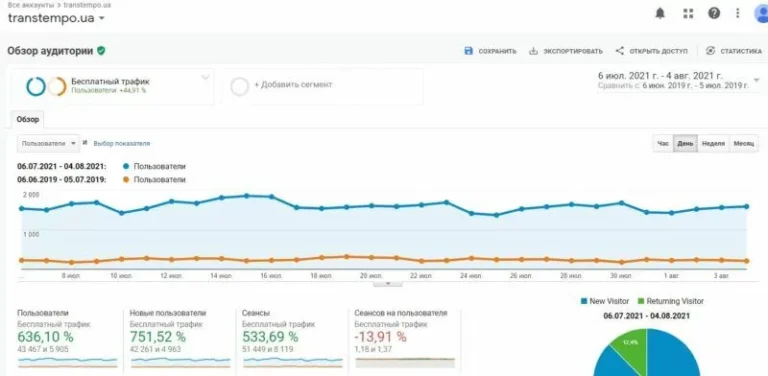
- Traffic to the site as a whole and to priority pages. If search traffic to the site is growing, link building is working.
- Rankings for priority search queries. Be sure to select search queries for the promoted pages in advance and track rankings for them. You can do this with Ahrefs, Serpstat, and similar services. The faster the promoted pages climb for the queries that matter to you, the more effective the promotion is overall.
- The total number of search queries. This is not the main factor, but it is still significant. If the site ranks for more and more queries and its positions for them are gradually improving, you are on the right track.
If the metrics stay the same or decline, you need to adjust your strategy: change the pace of link building and choose a different mix of link and anchor types.